 Porto Wine Cellar Tours
Tawny Port: What It Is and Where to Taste It in Porto
Tawny port is the style of Port defined by long ageing in wood. This guide explains what makes a tawny, what the age indications of 10, 20, 30 and 40 years actually mean, what a colheita is, how to serve and keep an open bottle, and which cellar tours in Gaia pour a tawny. All figures come from the IVDP and the port houses themselves. For a first visit, a Porto wine cellar tours booking that includes a tawny in the flight is an easy way to taste the style.
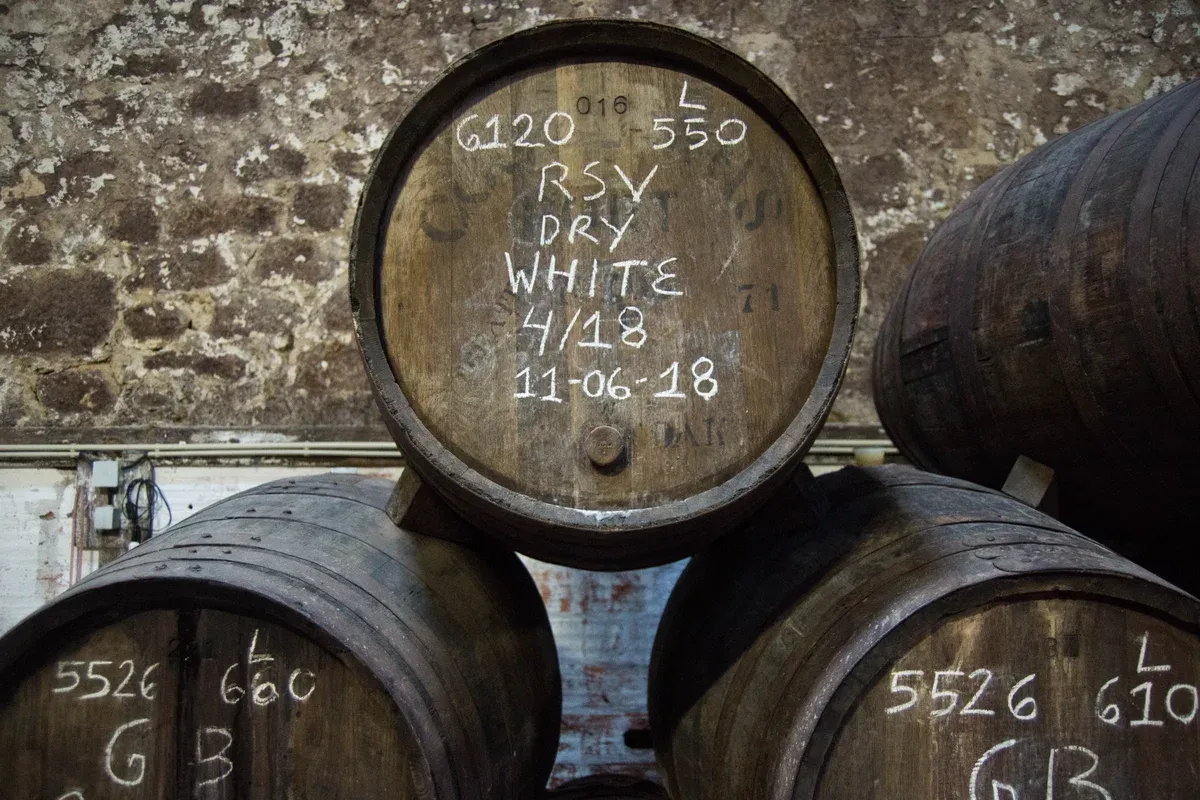
Small port casks with chalk labels in a cellar. Photo: reivax from Washington, DC, USA, CC BY-SA 2.0, via Wikimedia Commons
Quick answer Tawny port in brief
Tawny port is a fortified Port wine aged long in oak casks, which turns it tawny in colour and nutty in flavour. The IVDP recognises tawnies as Reserve, with an indication of age of 10, 20, 30 or 40 years, or as Colheita, a single-year tawny aged at least seven years in cask. Serve it at 10-14 C, and an opened bottle of age-indicated tawny keeps one to four months.
Key takeaways
- Age on a tawny label is the average age of a blend, not a single vintage. See the tawny ages table.
- A Cockburn's lodge tour with tawny pairing costs $34 and lasts 1.5 hours.
- Compare the cellar tours that pour a tawny in the tasting table.
- Tawny is one branch of the types of port wine. For the bottle-aged branch, see LBV port.
What Makes a Port a Tawny
A tawny is defined by how it ages, not by where its grapes grow or by one recipe. The wood does the work.
The Starting Point: A Fortified Wine From the Douro
The IVDP defines Port as a fortified wine from the Demarcated Region of the Douro, usually 19-22% vol. Fermentation is stopped early by adding grape spirit. Taylor's explains that this spirit is brandy at 77% alcohol, added when roughly half the natural grape sugar has turned to alcohol, which keeps the finished wine sweet. The IVDP gives the most common proportion as one part spirit to four parts of must-wine. The Douro demarcation dates to 10 September 1756 under the Marquis of Pombal, and in spring after each harvest the wines are first selected and classified. They then age either in the Douro or downriver in the bonded lodges of Vila Nova de Gaia.
Every tawny starts life as red wine from Douro grapes. What separates it from a ruby is everything that happens afterwards.
Ageing in Wood Changes the Colour and the Taste
A tawny spends years, often decades, in oak casks rather than being protected from air in a bottle. Oxygen works slowly through the wood. The deep red of a young Port fades towards amber and gold. The IVDP describes Port colours running from deep red to light gold, and an aged tawny sits at the golden end. The fruit freshness of a ruby gives way to dried fruit, nut and spice notes, the classic oxidative character.
Evaporation is part of the process. Taylor's notes that in the first years of cask ageing the angel's share can reach as much as 2%, which concentrates sugars, acids and aromas. Port usually sits at 19-22% vol.
The trade-off is the opposite of bottle-aged styles. A tawny gets its ageing in cask, while the IVDP says Vintage Port ages in bottle for 10 to 50 years. If you want the bottle-ageing story, the ruby side is covered in the page on LBV port.
The IVDP Family of Tawnies
The IVDP groups Port into four style families: Ruby, Tawny, White and Rosé. The tawny family has four rungs. Plain tawny sits at the bottom. Tawny Reserve is aged in oak, and Wines of Portugal puts its average age at five to seven years. Next come tawnies with an indication of age, in 10, 20, 30 and 40 years. At the top of the single-year branch sits Colheita, a vintage-dated tawny.
The IVDP grades these styles for quality on its sensory scale. Age-indicated tawnies and Colheitas, along with LBV and Crusted, are graded 8, meaning high. Reserve Ruby, Reserve Tawny and Reserve White are graded 7, meaning very good. Vintage alone is graded 9, exceptional. On that scale an age-indicated tawny ranks above a reserve.
Sweetness is set separately from colour. The winemaker chooses when to interrupt fermentation, so Port can range across the IVDP scale from extra dry to very sweet.
Sources: IVDP, Taylor's, Wines of Portugal
Reserve, 10, 20, 30, 40 Years and Colheita
Each step up the tawny ladder means more time in cask. The rules below come from the IVDP, Wines of Portugal and the houses.
How the Listings Compare
The table sets the rows side by side, and each figure comes from the sources linked under it.
| Style | Rule | What to expect |
|---|---|---|
| Tawny | The base style of the tawny family per the IVDP | The entry point of the family, with no age statement |
| Tawny Reserve | Aged in oak per the IVDP, average age five to seven years per Wines of Portugal | IVDP grade 7, very good |
| 10, 20, 30, 40 Year Old | Blend of several harvests, the stated age is the average age of the blend, per Sandeman and Cálem | IVDP grade 8, high. The older the number, the more amber the colour and the more dried fruit, nut and spice |
| Colheita | Single-year tawny aged a minimum of seven years in cask, per the IVDP | IVDP grade 8, high. Tawny character with a single harvest's year on the label |
The Styles Compared
The table sets out the tawny family from shortest to longest in wood. Minimum ageing rules come from the IVDP and Wines of Portugal. Average-age figures come from the houses themselves.
In the tours listed further down, the standard flights pour a reserve or a 10 year old tawny.
What the Age on the Label Actually Means
The number on a 10 year old tawny port is not a vintage year. Sandeman explains that an age-indicated tawny blends several harvests, and the stated age is the approximate average age of the wines in the blend. Cálem uses the same wording: a 10 Year Old is a blend aged an average of 10 years in oak casks, and the same rule applies to 20, 30 and 40 Year Old.
Because it is an average, the blend can stretch wide. Sandeman's 30 Year Old is a strict selection of wines between 25 and 40 years of age. Graham's ages its 40 Year Old an average of 40 years in seasoned oak casks, and Quinta do Noval ages its 40 Year Old in 640-litre casks called cascos. Taylor's sells all four ages, and its Century Collection gift box holds all four, 100 years of combined ageing in one case.
Colheita is the exception to blending. A colheita is a tawny from one single year, aged in cask for a minimum of seven years, and the year is printed on the label. Dow's describes colheitas as aged like blended tawnies in seasoned oak casks but from one harvest. Bottling can come much later than the legal minimum. Quinta do Noval's Colheita 2012 was first bottled in 2023 after about 15 years in wood. Houses may set their own stricter bar, and Cálem states that all its Colheitas are aged a minimum of 10 years, against the IVDP minimum of seven.
The Guide to Tawny Port Wine
What separates a tawny from a ruby and what the age statements mean. Third-party video by No Sediment. This site did not shoot it and has no relationship with the creator.
Serving a Tawny and Keeping It Open
An open bottle of tawny lasts weeks or months.
Serving Temperature and Glass
The IVDP recommends serving tawny style Port at 10-14 C, so slightly chilled. The houses give narrower windows for the old ones. Taylor's suggests its 40 Year Old slightly chilled at 12-16 C, Quinta do Noval gives 10-14 C for its 40 Year Old, and Burmester gives 14-16 C for its Colheita. Sandeman's general advice for tawny is 12-16 C.
Quinta do Noval says its 40 Year Old needs no decanting because the wine is filtered, and Taylor's says the same for its 40 Year Old. Sandeman also says no decanting for its 30 Year Old but notes it benefits from aeration. Pour into a large glass. Sandeman recommends glasses of at least 35 cl so the aromas have room. For full glassware detail and food pairing, see the page on how to drink port wine.
How Long an Open Bottle Keeps
Because a tawny has already spent its life in contact with air, an open bottle keeps far longer than a ruby or a vintage. The IVDP's opened-bottle guide gives plain tawny and tawny reserve three to four weeks, and age-indicated tawny, Colheita and aged white one to four months. Compare that with vintage Port at one to two days.
The houses sit inside that range. Graham's says enjoy its 40 Year Old within eight weeks of opening. Sandeman gives two to three months for its 30 Year Old. Quinta do Noval allows three months for its 40 Year Old, kept in a cool place, and Burmester gives two to four months for its Colheita. Dow's says a Colheita keeps for some weeks after opening and tastes best slightly chilled.
Storage is simple. Keep the bottle upright and away from light, which is exactly what Burmester advises for its Colheita. Sandeman's rule for non-vintage bottles, which covers every tawny, is upright in a cool dark place. Only vintage Ports lie on their side.
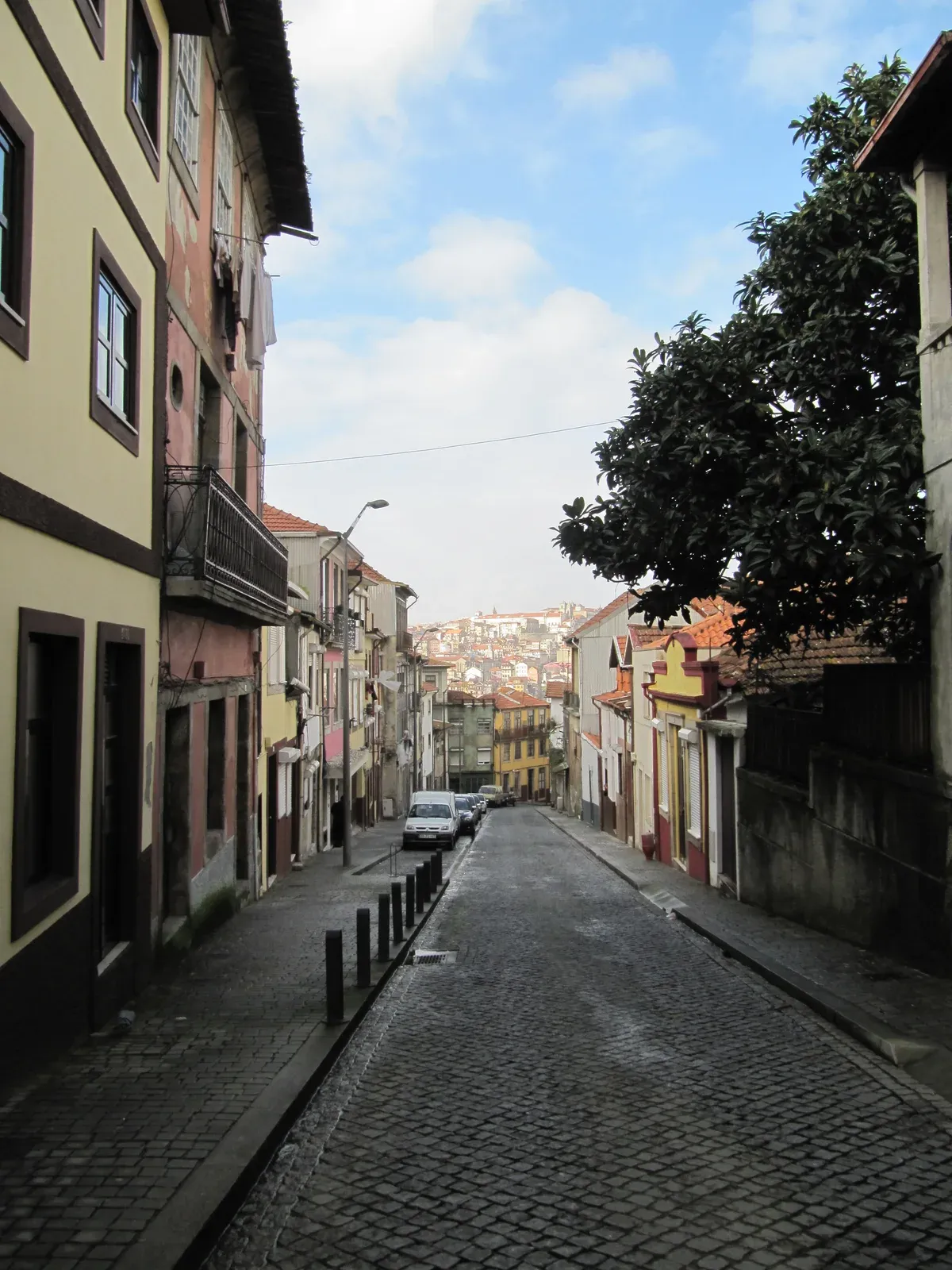
A cobbled lane in Vila Nova de Gaia with Porto beyond. Photo: jad99 from Graz, Austria, CC BY-SA 2.0, via Wikimedia Commons
Cellar Tours That Pour a Tawny
Several Gaia cellars pour a tawny in their standard tasting, and some let you upgrade the tawny itself. Prices below are as listed on the tour cards.
How the Listings Compare
The table sets the rows side by side, and each figure comes from the sources linked under it.
| Tour | Tawny poured | Price |
|---|---|---|
| Cockburn's Port Lodge Tour | Cockburn's 10 Year Old in the Classic option, tawny pairing also offered | $34 |
| Taylor's Port Cellars Tour | Taylor's 10 Year Old Tawny, in the 3-port tasting | $28 |
| Poças Port Cellar Tour | Poças Reserve Tawny, one of the 3 ports | $26.31 |
| Small-Group Port Cellars Tour | CD Porto tawny reserva and 10-year tawny, within 7 tastings | $61.78 |
| Burmester Cellar Tour | Burmester 10 Year Old Tawny, in the pairing options | $26 |
The Tours and Their Tawnies
Five visits stand out for the tawny in the glass. The Cockburn's Port Lodge Tour is a 1.5-hour guided visit of the largest Port lodge in Vila Nova de Gaia, with the longest ageing gallery of any Port cellar in Vila Nova de Gaia, and a choice of tawny pairing at $34. The Taylor's Port Cellars Tour is a self-guided visit with a 13-language audio guide and three ports for $28. The Poças Port Cellar Tour pours a Reserve Tawny among its three wines at $26.31. The Small-Group Port Cellars Tour by CD Porto covers three producers within 400 m with seven tastings, including a tawny reserva and a 10-year tawny, for $61.78. The Burmester Cellar Tour is a short riverside visit with pairing options including a 10 Year Old Tawny from $26.
None of the five includes hotel pickup. The CD Porto tour also excludes gratuities, food and appetizers, and Poças sells its sausage and cheese board separately from the ticket. For the full picture across every cellar, the port wine cellars map helps you plan the walk.
A Sensible Tasting Order
If your flight includes more than one tawny, taste from youngest to oldest. Start with a reserve tawny, around five to seven years of average age, then a 10 year old tawny port, and only then a 20 or 40 year old if you have one. The wood-driven nut and dried-fruit character grows with age, and an older tawny will flatten the impression of a younger one if you go the other way round.
Serving advice differs by source. The IVDP gives 10-14 C for tawny style Port, and the houses quoted above give windows of 12-16 C or 14-16 C for their old tawnies. Use a generous glass of at least 35 cl, which Sandeman recommends, and give a 30 Year Old a swirl before the first sip, since Sandeman notes it benefits from aeration even without decanting.
Prices from the tour listings on the booking platforms.
Tawny Port Questions
Is tawny port sweet?
Port keeps residual sweetness, because fermentation is stopped early by adding grape spirit and natural grape sugar is left in the wine. The IVDP sweetness scale runs from extra dry under 40 g/l to very sweet over 130 g/l, and the winemaker sets where a wine lands by choosing when to interrupt fermentation. Ageing in wood concentrates those sugars further. See Taylor's on how Port is made.
What does 10 year old tawny port mean?
It does not mean the wine is from a single year. Sandeman explains that an age-indicated tawny blends several harvests and the stated age is the approximate average age of the wines in the blend, and Cálem uses the same wording for its 10 Year Old. A 10 year old tawny port is therefore a blend with an average of ten years in oak casks. You can taste one on the Taylor's Port Cellars Tour for $28.
What is a colheita port?
A colheita is a tawny port from a single harvest, aged in cask for a minimum of seven years, per the IVDP. Unlike an age-indicated tawny, the year is on the label and the wine is not blended across harvests. Bottling often comes long after the minimum. Noval's Colheita 2012 waited about 15 years in wood before its first bottling. Read more on the tawny ages table.
How long does an open bottle of tawny port keep?
Longer than ruby or vintage Port, because it has already aged in contact with air. The IVDP gives plain tawny and reserve three to four weeks once open, and age-indicated tawny or Colheita one to four months. Graham's advises finishing its 40 Year Old within eight weeks. Keep the bottle upright and away from light. The IVDP's guide is here.
What temperature should tawny port be served at?
The IVDP recommends 10-14 C for tawny style Port, so slightly chilled. The houses narrow it for old wines: Taylor's gives 12-16 C for its 40 Year Old, Burmester gives 14-16 C for its Colheita. Taylor's, Noval and Sandeman say their old tawnies need no decanting, and Sandeman recommends a large glass of at least 35 cl. More detail is on the page about how to drink port wine.
Which is better, tawny or ruby port?
Neither is better, they are different branches of the IVDP's style families. A tawny ages in wood, so it tastes of nuts, dried fruit and spice and an age-indicated tawny keeps one to four months once open, while a plain ruby keeps 8 to 10 days. If you like both, the Small-Group Port Cellars Tour pours a tawny reserva, a 10 year old tawny and two LBV among its seven ports. The full comparison is on the page on types of port wine.